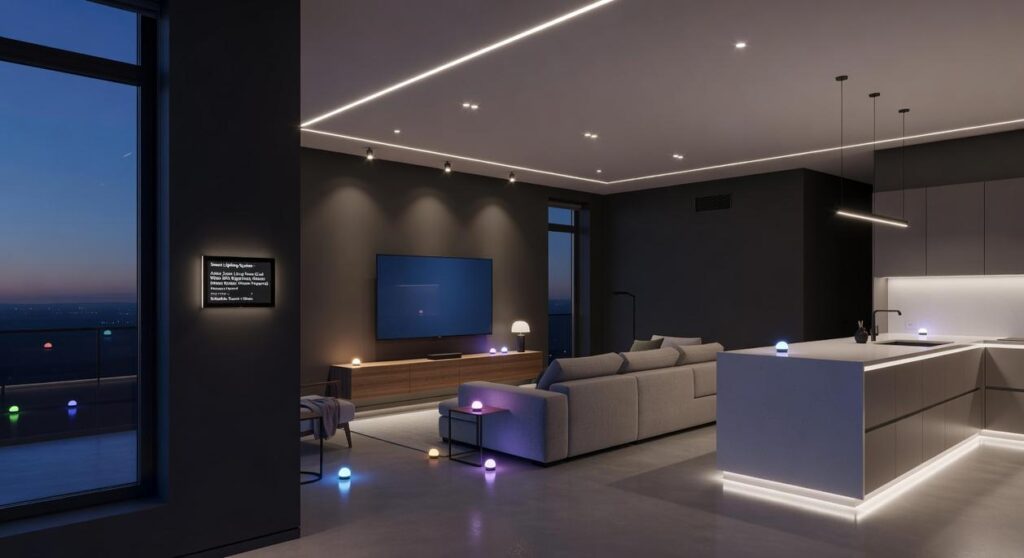
Creating a home that feels comfortable, efficient, and easy to manage isn’t just about style—it’s about making smart, informed choices that improve your daily life. If you’re searching for practical ways to upgrade your living space, streamline routines, and reduce unnecessary costs, this guide is designed to help you do exactly that.
In this article, you’ll discover how core home concepts, wellness-focused habits, smart technology integrations, and simple organization strategies can work together to transform your space. From optimizing layouts for better flow to leveraging smart lighting energy savings for lower utility bills, we break down actionable steps you can implement right away.
Our insights are grounded in up-to-date home innovation research, industry best practices, and proven organization methods used by homeowners seeking sustainable, stress-free living. Whether you’re looking to boost efficiency, enhance comfort, or future-proof your home, you’ll find clear, trustworthy guidance tailored to your goals.
High energy bills are more than an annoyance; they’re a steady drain on your household budget. Yet many homeowners overlook a simple culprit: outdated lighting. Traditional incandescent bulbs—an older technology that converts most electricity into heat rather than light—waste energy. In contrast, modern LED systems, or light-emitting diodes, use semiconductors to produce bright, efficient illumination. As a result, they cut costs while improving comfort. Beyond lower bills, today’s options support wellness through adjustable color temperature—meaning the warmth or coolness of light—and customizable controls. This guide breaks down smart lighting energy savings step by step, from bulb swaps to integrated systems.
The Hidden Costs of Outdated Lighting
Beyond the Bulb
Traditional incandescent and halogen bulbs are surprisingly INEFFICIENT. An incandescent bulb converts only about 10% of its energy into visible light; the rest escapes as heat (U.S. Department of Energy). In simple terms, you’re paying to warm the ceiling. Halogens perform slightly better, but they’re still heat-heavy. I’ll admit, exact efficiency percentages can vary by brand and usage, but the pattern is consistent: most of the wattage isn’t lighting your room.
Quantifying the Impact
A single 60-watt incandescent bulb used four hours a day costs roughly $13 per year in electricity, while a 9-watt LED equivalent costs about $2 (Energy.gov estimates, based on average U.S. rates). Multiply that across 20 bulbs, and the gap grows fast.
- Higher ENERGY bills
- Frequent replacements
- Added cooling strain in warm climates
The Ripple Effect
Beyond cost, there’s waste. Incandescents burn out quickly, filling landfills. LEDs last 15–25 times longer. While I can’t promise exact savings for every home, smart lighting energy savings consistently outperform older systems—and that’s hard to ignore.
LEDs: The Foundation of Energy-Efficient Lighting
What Is LED Technology?
Think of an LED (light-emitting diode) as a tiny, highly disciplined athlete. Instead of wasting energy like an old incandescent bulb—which releases most of its power as heat—an LED channels nearly all its effort into producing light. The result? Up to 80% less energy use compared to traditional bulbs (U.S. Department of Energy). In practical terms, that means lower utility bills and fewer bulb changes. While older bulbs burn out in months, LEDs can last for years—often 15,000 to 25,000 hours or more. It’s the tortoise in the race: steady, efficient, and built for the long haul.
More Than Just a Light
But LEDs aren’t just efficient—they’re adaptable. Imagine lighting as the soundtrack of your home. Warm light (around 2700K) feels like a cozy acoustic set in your living room, while cool light (4000K–5000K) is more like an upbeat morning playlist in your kitchen or office. Choosing the right tone supports mood, focus, and relaxation. And when paired with smart lighting energy savings, your home becomes both calming and cost-conscious.
Key Metrics to Know
Lumens measure brightness (higher lumens = brighter light). Kelvin measures color temperature. Once you know these two numbers, choosing a bulb feels less like guesswork—and more like dialing in the perfect setting.
Level Up Your Savings with Smart Lighting Systems

If you’re still flipping switches manually, you’re leaving efficiency on the table. The next step in home optimization is smart lighting—systems that ensure lights are only on when needed. In simple terms, smart lighting uses connected devices and automation to control when, where, and how brightly your lights operate. The result? Lower bills and less wasted energy (and fewer “Did I leave the light on?” moments).
So how does it actually work? Let’s break it down.
Smart Bulbs are the easiest entry point. These Wi-Fi or Bluetooth-enabled bulbs connect to an app, allowing you to schedule, dim, or turn off lights remotely. Think of them as regular LED bulbs with a brain. For example, you can schedule your porch light to switch off at sunrise automatically.
Next, Smart Switches & Dimmers control entire fixtures or circuits. Instead of adjusting one bulb, you manage every light wired to that switch. Dimming isn’t just about mood lighting—it directly reduces electricity consumption because lower brightness means lower wattage use (Energy.gov confirms that dimming LEDs can extend lifespan and cut energy use).
Finally, Motion and Daylight Sensors offer a true set-it-and-forget-it solution. Motion sensors turn lights off when rooms are empty, while daylight sensors dim artificial lighting when natural light is sufficient. This automation is the backbone of smart lighting energy savings.
Some argue manual habits are enough. But realistically, automation removes human error. Pair these systems with integrating voice assistants with everyday appliances for seamless control.
Pro tip: Start with high-traffic areas like kitchens or hallways to see noticeable savings faster.
Putting It All Together: A Room-by-Room Action Plan
Think of efficient lighting as a home organization project. Instead of decluttering closets, you’re decluttering wasted watts. The Department of Energy reports LED bulbs use at least 75% less energy and last 25 times longer than incandescent lighting, making a systematic upgrade both practical and measurable.
Start where function matters most.
Kitchen & Bathroom
Bright, cool-toned task lighting (4000K–5000K) improves visibility for cooking and grooming. Under-cabinet LEDs reduce shadowing, while motion sensors ensure lights switch off automatically. Studies show occupancy sensors can cut lighting energy use by up to 30% in residential spaces (U.S. DOE). That’s real smart lighting energy savings in action.
Living Room & Bedroom
Layered lighting—overheads, lamps, and accent fixtures—supports wellness. Research from Harvard Medical School links warm evening light to improved sleep quality by supporting melatonin production. Add smart dimmers and scheduling to create:
- A calming wind-down scene at 9 p.m.
- A gradual wake-up glow in the morning
- Automatic daytime shutoff when rooms are empty
Hallways & Entryways
These are prime spots for motion sensors. Case studies show transitional spaces often account for unnecessary runtime because lights are left on accidentally (we’ve all done it). Automating them eliminates guesswork and waste.
Your Next Step to a Smarter, More Efficient Home
You’re tired of high utility bills and light bulbs that burn out at the worst possible time (usually when guests are coming over). The fix doesn’t have to be complicated. Combining LED technology with smart controls is the most effective way to cut lighting-related energy use. LEDs use less power, and smart systems automate when and how lights run—maximizing smart lighting energy savings without constant micromanaging.
The payoff? Lower bills and a home that feels calmer, cozier, and aligned with your routines.
Start small:
- Swap your five most-used bulbs for LEDs or install one smart dimmer and notice the difference.
Bring Comfort, Control, and Clarity Back to Your Home
You came here looking for practical ways to create a home that feels calmer, smarter, and easier to manage. Now you have a clear path forward — from simple organization upgrades to wellness-focused routines and tech integrations that actually make daily life smoother.
The frustration of cluttered spaces, wasted energy, and disconnected systems can quietly drain your time and focus. When your home isn’t working for you, everything feels harder than it should. The good news? Small, intentional changes — like optimizing layouts, building consistent routines, and leveraging smart lighting energy savings — can transform your space into one that supports your lifestyle instead of complicating it.
Now it’s time to take action. Choose one area to improve today — whether it’s decluttering a high-traffic room, automating a lighting schedule, or refining your wellness corner — and implement what you’ve learned.
If you’re ready to simplify your routines, cut energy waste, and build a home that truly works for you, start applying these strategies now. Thousands of homeowners are already upgrading their spaces with smarter systems and streamlined organization — and you can too. Take the first step today and turn your home into the efficient, calming space you deserve.