
Tackling home improvements can feel empowering—until you’re knee-deep in materials, timelines, and unexpected costs. If you’re trying to decide between DIY vs professional home projects, you’re likely wondering which option will truly save you money, protect your home’s value, and deliver the results you want. This article is designed to help you make that decision with clarity.
We break down when a hands-on approach makes sense and when hiring a professional is the smarter long-term investment. From cost comparisons and time commitments to safety considerations and resale impact, you’ll get practical insights tailored to modern homeowners.
To ensure accuracy, we’ve reviewed industry data, contractor estimates, and real-world project outcomes to provide guidance you can rely on. Whether you’re upgrading a single room or planning a full-scale renovation, you’ll walk away knowing exactly which path fits your skills, budget, and goals.
Making the Right Call for Your Home Renovation
Home upgrades promise comfort and value, yet the question is timing and talent. First, define the scope: cosmetic paint, structural wall removal, or thermostat installation. Each carries risks and permit requirements, which directly affect resale value. Next, calculate costs—materials, tools, and time. According to HomeAdvisor, labor can represent 20–35% of project expenses, but mistakes can double that.
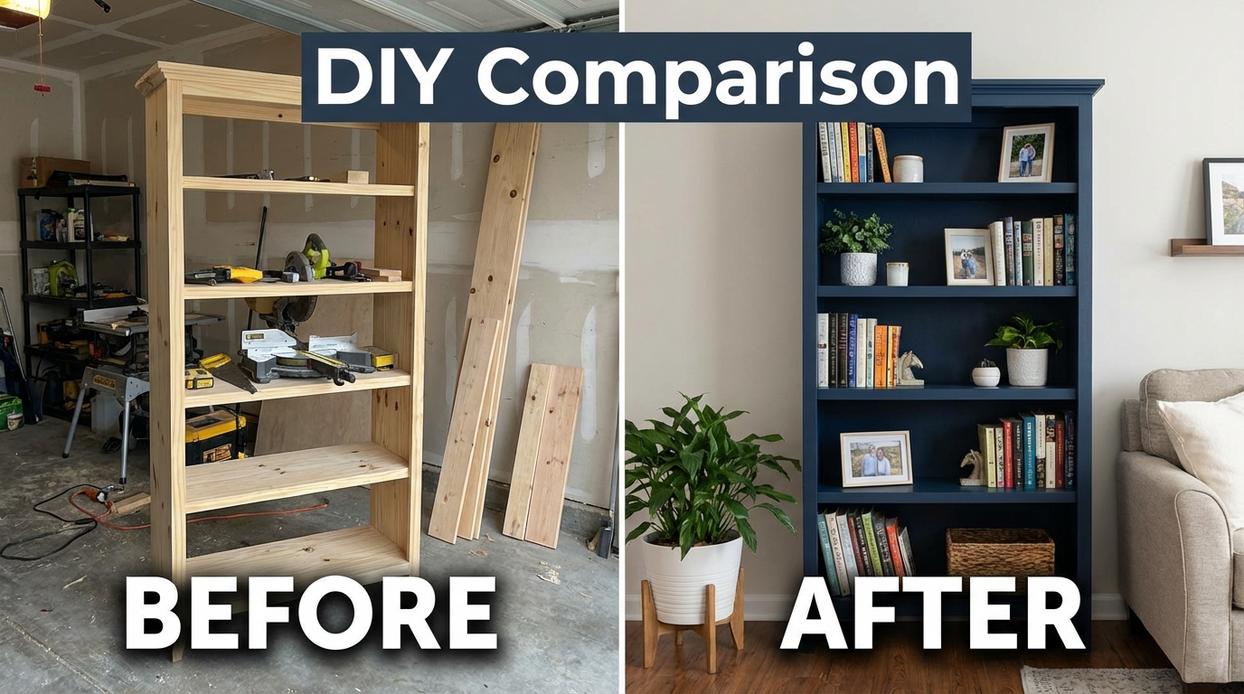
However, confidence matters. DIY vs professional home projects often hinge on skill, safety, and warranty protection. For example, electrical rewiring demands expertise for code compliance. Meanwhile, shelving installs are manageable (if you own a level).
The Decision Framework: Cost, Time, Skill, and Risk
Every home upgrade comes down to four levers: cost, time, skill, and risk. Master these, and you’ll make smarter calls (and sleep better at night).
Cost Analysis
It’s not just materials vs. labor. Hidden DIY costs add up fast: extra tools, permit fees, rework after mistakes, even takeout dinners when your kitchen’s unusable. Professionals bring efficiency and supplier networks that often reduce waste and delays. According to HomeAdvisor, labor can account for 20–50% of project costs—but mistakes can exceed that (HomeAdvisor, 2023). The benefit? A clear cost breakdown helps you avoid “cheap” projects that get expensive fast.
Time Commitment
Think in terms of a Time Budget—the realistic number of hours you can commit weekly. A weekend project can quietly stretch into months (we’ve all seen that sitcom subplot). What’s your hourly time worth? When you calculate it, outsourcing may free you for higher-value priorities.
Skill & Tool Assessment
Be honest:
- Have you done this successfully before?
- Do you own specialized tools?
- Can you deliver a finish you’ll love long term?
“YouTube-level” confidence isn’t the same as trade-level precision.
Risk & Consequence
With DIY vs professional home projects, the stakes vary. Plumbing errors can cause water damage averaging $11,000 per claim (Insurance Information Institute, 2022). Structural or electrical mistakes raise safety risks. Evaluating consequences upfront protects your home—and your wallet.
Scenario 1: Painting an Interior Room
When it comes to DIY vs professional home projects, interior painting is the low-stakes gateway. The tools are simple—rollers, brushes, painter’s tape, drop cloths—and the skills are learnable. Prep work (that’s cleaning, sanding, and taping to protect trim) is the most time-consuming part, but it’s straightforward.
DIY Breakdown
- Low risk of serious damage
- Minimal specialized equipment
- High cost savings
- Great confidence booster
If you can follow directions and stay patient, you can paint a room. (Yes, even if your last art project was finger painting in kindergarten.)
When to Hire a Pro
- Vaulted or hard-to-reach ceilings
- Detailed crown molding or intricate trim
- High-traffic areas needing a flawless, durable finish fast
Recommendation: Start with a small bedroom or office. Use quality paint—two coats minimum—and give yourself extra prep time. You’ll save money and build skills without risking a renovation horror story.
Scenario 2: Installing a Smart Faucet or Thermostat
You bought a sleek smart faucet or thermostat, picturing instant efficiency. Then you open the manual—and it reads like a spaceship repair guide. Frustrating, right?
DIY Breakdown
This project tests basic plumbing or electrical knowledge. The risk is moderate—a small leak, a blown fuse, or the dreaded Wi‑Fi sync failure. You’ll need to shut off water mains or power breakers safely. (Yes, flipping the wrong breaker is as annoying as it sounds.) Carefully follow diagrams and double-check seals and wire connections.
| Task | Difficulty | Common Mistake |
|——|————|—————-|
| Smart Faucet | Moderate | Loose fittings causing leaks |
| Smart Thermostat | Moderate | Incorrect wire labeling |
When to Hire a Pro
If touching your electrical panel makes you uneasy, that’s your cue. Safety matters more than saving a few dollars.
The Verdict
A Confident DIY project—especially if you’ve mastered technical instructions before. In the world of DIY vs professional home projects, this sits squarely in the middle. Still unsure? Review energy basics in a beginners guide to reading home energy reports.
Scenario 3: Tiling a Bathroom Floor
Tiling a bathroom floor is often framed as a weekend warrior win. Scroll social media and you’ll see flawless time-lapses that make it look deceptively simple (spoiler: it’s not). This is a complex, multi-stage project requiring specialized tools like a wet saw and notched trowel, meticulous subfloor leveling, and precise layout planning to avoid awkward slivers of tile along the walls.
Here’s the contrarian take: while most advice says “always hire a pro,” that blanket rule isn’t entirely fair. If you already have hands-on experience with flooring or have successfully tackled smaller tile jobs, this can be a calculated stretch project. Preparation is the real skill gap. According to the National Association of Home Builders, improper waterproofing is a leading cause of bathroom floor failure and mold issues (nahb.org). That risk—not the tile itself—is what makes this project unforgiving.
Still, in the broader debate of DIY vs professional home projects, this one leans heavily toward professional help. Mistakes can mean cracked tiles, uneven surfaces, or water damage beneath the surface (the kind you don’t see until it’s expensive).
The verdict: hire a pro unless you’re truly prepared. You’re paying for waterproofing precision, durability, and resale value—not just straight grout lines.
Your Personalized Project Blueprint
You don’t need another vague rule of thumb. You need a framework that works every time.
Think of this as your four-part filter: Cost, Time, Skill, and Risk. Together, they turn big, fuzzy decisions into clear next steps.
I once asked a neighbor how she finally chose between DIY vs professional home projects. She laughed and said, “I stopped asking what sounded fun and started asking what could go wrong.” That’s Risk—the potential downside if something fails, from wasted money to safety hazards.
Here’s how to break it down:
- Cost: Not just materials, but tools, mistakes, and your time.
- Time: The real hours required (not the optimistic Saturday estimate).
- Skill: Your current ability—not your YouTube confidence.
- Risk: Structural damage, code violations, or injury.
“Score it,” a contractor once told me. “Numbers don’t lie—even when pride does.” Rate each pillar from 1–10 in a notebook. High Skill and low Risk? You’re probably safe to proceed. Low Skill and high Risk? Call in backup.
Some argue this takes the spontaneity out of home projects. Maybe. But clarity beats regret (especially with plumbing).
By turning emotion into a checklist, you eliminate guesswork—and start building a home that genuinely supports your life.
Bring Your Home Vision to Life with Confidence
You started this guide because you wanted clarity — how to create a home that feels organized, efficient, and aligned with your lifestyle. Now you have a clearer understanding of what works, what to prioritize, and how small, intentional upgrades can transform your daily routine.
The real frustration isn’t just clutter or outdated systems — it’s feeling like your home isn’t working for you. Whether you’re weighing DIY vs professional home projects, building better wellness routines, or integrating smarter technology, the goal is the same: a home that supports your life instead of adding stress to it.
Here’s your next step: choose one improvement and take action today. Start the organization reset. Plan the smart upgrade. Map out the renovation properly. Momentum builds confidence.
If you’re ready for practical, proven strategies that simplify your space and elevate how you live, explore more expert-backed home insights now. Thousands of readers rely on these ideas to create calmer, smarter homes — and you can too. Start today and turn your home into a space that truly works for you.