

Creating a home that feels calm, organized, and supportive of your well-being doesn’t happen by accident. If you’re searching for practical ways to refresh your space, build better habits, and simplify daily life, you’re in the right place. This article is designed to help you reset your environment with clear, actionable strategies that blend smart home integrations, effective organization hacks, and sustainable wellness routines.
We’ve drawn from proven home management principles, current smart living trends, and research-backed wellness practices to ensure every tip is both practical and impactful. Whether you’re looking to reduce clutter, streamline your mornings, or establish a consistent weekly home reset routine, you’ll find guidance that’s realistic and easy to maintain.
By the end, you’ll have a structured approach to transforming your home into a space that supports productivity, relaxation, and balance—without adding more stress to your schedule.
From Weekend Warrior to Weekly Winner
Incorporating a weekly reset routine not only helps maintain your home’s tidiness but also complements essential tasks like ensuring your ventilation systems are functioning properly, as detailed in our article on Understanding the Basics of Home Ventilation Systems.
If your Saturdays disappear under piles of laundry and half-finished chores, you’re not alone. The all-day cleaning sprint feels productive, yet by Wednesday the mess is back (how does that even happen?). The problem isn’t effort—it’s lack of a simple system.
Here’s the fix: a weekly home reset routine built around small, repeatable tasks spread across seven days. Instead of marathon scrubbing, assign focused zones per day and anchor them to habits you already have.
• Declutter high-traffic surfaces daily
• Laundry on one set day
• Ten-minute nightly reset
Consistency beats intensity—every time.
The “Why”: Unlocking the Power of a Cleaning Routine
A cleaning routine isn’t just about appearances. It’s about mental clarity. Studies show clutter increases cortisol, the body’s primary stress hormone (UCLA’s Center on Everyday Lives of Families). In simple terms: more mess, more stress. A tidy space removes visual noise, helping your brain focus on what actually matters.
Let’s clarify decision fatigue. This term describes the mental drain that comes from making too many small choices throughout the day. (Yes, even deciding whether to wipe the counters counts.) When you follow a set plan—like a weekly home reset routine—you eliminate that daily debate.
Consider two approaches:
- Marathon cleaning: one exhausting Saturday, zero energy left.
- Sprint cleaning: short, targeted daily tasks that feel manageable.
Some argue marathons are “more productive.” But consistency beats intensity. Think of it like brushing your teeth—you wouldn’t skip all week and scrub for an hour on Sunday (your dentist would faint). Small sprints win because they’re sustainable.
Step 1: Architecting Your Personalized Cleaning Schedule
Before you scrub a single sink, you need a plan. Think of this step as designing the blueprint for how your home stays clean.
1. Task Inventory (Your Brain Dump)
A brain dump simply means writing down every cleaning task you can think of—no organizing yet, just listing. Wipe counters. Dust baseboards. Clean ceiling fans. Sanitize trash cans. Vacuum under the couch. If it gets dirty, it goes on the list.
Why this matters: most overwhelm comes from hidden tasks (the ones you forgot until guests are on the way). Getting everything out of your head and onto paper reduces mental clutter (and yes, that counts too).
2. Frequency Sorting
Now, sort each task into three clear buckets:
- Daily (5–15 minutes): Dishes, wiping counters, quick floor sweep
- Weekly (1–2 hours total): Bathrooms, mopping, changing sheets
- Monthly/Quarterly: Baseboards, deep appliance cleaning, washing windows
If you’re unsure where something belongs, ask: How fast does this get visibly dirty? That’s your clue.
3. Time Blocking & Zoning
Time blocking means assigning tasks to specific days. Zoning means grouping tasks by area of the home.
Example:
- Monday: Bathrooms
- Tuesday: Kitchen deep clean
- Wednesday: Living areas
- Saturday: weekly home reset routine
This prevents the “clean everything at once” trap (which never ends well).
Sample Weekly Template:
Mon – Bathrooms
Tue – Kitchen
Wed – Bedrooms
Thu – Floors
Fri – Catch-up
Sat – Reset
Sun – Rest
Keep it flexible. A smaller apartment may need less time; a busy household may need more. The goal isn’t perfection—it’s consistency.
Step 2: The Daily Reset and Weekly Deep Dive
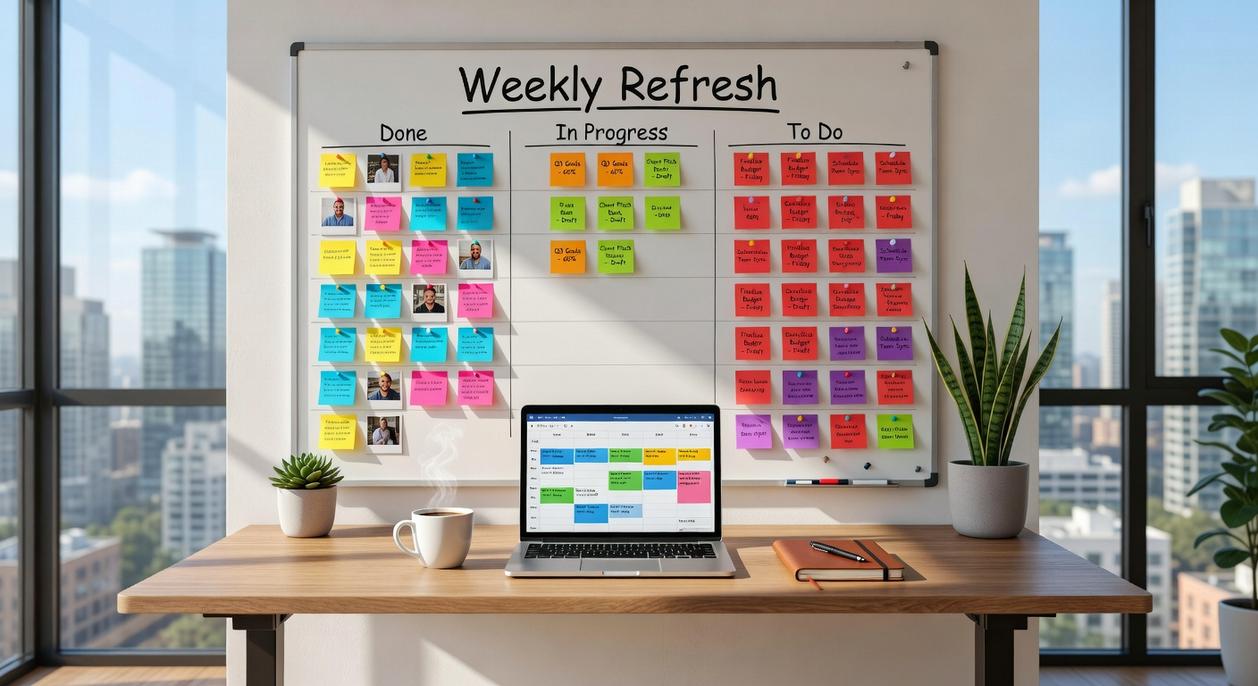
If “cleaning routine” sounds overwhelming, let’s simplify it. A reset just means returning your home to baseline—clear surfaces, items in their place, no visual chaos (the kind that makes you sigh the moment you walk in).
The 15-Minute Daily Reset
These are your non-negotiables—the small habits with outsized impact:
- Make the bed. It instantly signals order (yes, even if no one sees it).
- Quick kitchen counter wipe-down. Crumbs attract clutter—and sometimes ants.
- The “one-touch” rule. One-touch means you handle an item once and put it away immediately instead of setting it down “for now.”
Some argue daily resets are unnecessary if you clean weekly. But here’s the catch: skipping small daily actions turns into marathon sessions later. Fifteen minutes now prevents two-hour catch-ups later (future you will be grateful).
The Weekly Deep Dive Checklist
Think of this as your structured weekly home reset routine—focused, not frantic.
Kitchen
- Clean appliance fronts
- Wipe backsplash
- Mop floor
Bathroom
- Scrub toilet and shower
- Clean mirrors
- Wash bathmats
Living Areas & Bedrooms
- Dust surfaces
- Vacuum floors
- Change bed linens
Focus on Task Batching
Task batching means grouping similar actions together for efficiency. For example:
- Dust every room.
- Then vacuum the whole house.
- Then mop hard floors.
Switching tools less often saves time and mental energy (think of it like meal prepping, but for chores).
If clutter keeps slowing you down, revisit these decluttering strategies that actually work before your next reset. Pro tip: set a timer—constraints create focus.
Supercharge Your System: Smart Hacks and Organization Tips
Smart Home Integration That Works for You
Smart homes aren’t just flashy gadgets—they’re automated systems that handle repetitive tasks with minimal input. Schedule a robot vacuum (like Roomba or Roborock models with app-based mapping) to run daily at 9 a.m., and use smart plugs to power air purifiers during peak pollen hours. These features reduce manual effort while improving air quality and floor maintenance (Consumer Reports, 2024). The benefit? Cleaner spaces without lifting a finger.
Organizational Hacks That Stick
Create “homes” for everything—meaning every item has a designated, repeatable spot. Use vertical shelving to maximize unused wall space, and apply the “one in, one out” rule to prevent clutter creep (yes, even with throw pillows). Pair this with a weekly home reset routine to maintain order. Systems beat motivation every time.
The Power of a Go-Bag
Keep a portable cleaning caddy stocked with microfiber cloths, all-purpose spray, and gloves. You’ll cut prep time instantly (pro tip: store refills inside the caddy).
Your Home, Your Haven
It’s not about perfection; it’s about consistent progress that builds a peaceful living environment. Cleaning chaos steals time and peace of mind, draining your energy. This system works because it turns overwhelm into manageable, routine actions. Instead of marathon scrubbing, you rely on a weekly home reset routine to stay ahead.
- Start with ten minutes today.
Pro tip: write it somewhere visible.
Speculation: As smart homes evolve, daily resets may become automated prompts, but habits will still matter most.
Take 10 minutes now to draft the Daily Reset list. Start small, start today, reclaim your home.
Create a Home That Works for You
You came here looking for practical ways to make your home feel calmer, more organized, and easier to manage. Now you have the tools to reset your space, build better systems, and finally stay ahead of the clutter instead of constantly reacting to it.
The real pain isn’t just the mess — it’s the mental load. The unfinished tasks. The constant feeling that your home is running you instead of the other way around.
That’s why committing to a weekly home reset routine changes everything. It keeps small messes from becoming overwhelming projects and turns chaos into consistency.
Start this week. Block 30–60 minutes, follow the reset steps, and notice how much lighter your space feels. If you want more simple systems, smart home tips, and organization strategies that actually stick, explore our proven guides and put them into action today. Thousands are already transforming their homes with these methods — now it’s your turn.
 John Powellorins writes the kind of smart home integrations content that people actually send to each other. Not because it's flashy or controversial, but because it's the sort of thing where you read it and immediately think of three people who need to see it. John has a talent for identifying the questions that a lot of people have but haven't quite figured out how to articulate yet — and then answering them properly.
They covers a lot of ground: Smart Home Integrations, Browse and Learn, Home Organization Hacks, and plenty of adjacent territory that doesn't always get treated with the same seriousness. The consistency across all of it is a certain kind of respect for the reader. John doesn't assume people are stupid, and they doesn't assume they know everything either. They writes for someone who is genuinely trying to figure something out — because that's usually who's actually reading. That assumption shapes everything from how they structures an explanation to how much background they includes before getting to the point.
Beyond the practical stuff, there's something in John's writing that reflects a real investment in the subject — not performed enthusiasm, but the kind of sustained interest that produces insight over time. They has been paying attention to smart home integrations long enough that they notices things a more casual observer would miss. That depth shows up in the work in ways that are hard to fake.
John Powellorins writes the kind of smart home integrations content that people actually send to each other. Not because it's flashy or controversial, but because it's the sort of thing where you read it and immediately think of three people who need to see it. John has a talent for identifying the questions that a lot of people have but haven't quite figured out how to articulate yet — and then answering them properly.
They covers a lot of ground: Smart Home Integrations, Browse and Learn, Home Organization Hacks, and plenty of adjacent territory that doesn't always get treated with the same seriousness. The consistency across all of it is a certain kind of respect for the reader. John doesn't assume people are stupid, and they doesn't assume they know everything either. They writes for someone who is genuinely trying to figure something out — because that's usually who's actually reading. That assumption shapes everything from how they structures an explanation to how much background they includes before getting to the point.
Beyond the practical stuff, there's something in John's writing that reflects a real investment in the subject — not performed enthusiasm, but the kind of sustained interest that produces insight over time. They has been paying attention to smart home integrations long enough that they notices things a more casual observer would miss. That depth shows up in the work in ways that are hard to fake.