

If you’re searching for practical ways to create a calmer, more functional home, you’re in the right place. This article is designed to help you simplify everyday routines through smarter organization, wellness-focused habits, and intuitive home setups that actually work in real life. Whether your goal is better flow in high-traffic areas or improving organized kitchen efficiency, we break down actionable strategies you can implement right away.
We’ve analyzed proven home organization methods, smart storage solutions, and habit-building techniques used by productivity experts and professional organizers. Instead of vague tips, you’ll find clear guidance rooted in practical experience and research-backed wellness principles.
By the end, you’ll understand how thoughtful layout choices, simple system upgrades, and consistent routines can transform your space into one that supports your lifestyle—reducing stress, saving time, and helping your home function as smoothly as it looks.
An overcrowded, disorganized kitchen doesn’t just look bad; it quietly steals minutes from every meal and adds unnecessary stress. When drawers jam and tools hide, creativity disappears. Fortunately, this guide offers a practical, step-by-step plan to restore calm and boost organized kitchen efficiency.
First, you’ll learn how to create clear zones for prep, cooking, and storage so everything has a logical home. Next, we’ll cover smart storage solutions that maximize space without costly renovations. Finally, you’ll implement simple daily and weekly routines that keep clutter from creeping back, making your kitchen smoother, faster, and genuinely enjoyable to use every day.
The Foundation: A Ruthless Declutter and Reset
If your space feels chaotic, start with a COMPLETE RESET. The “Empty Out” Method is simple: choose ONE small area—one drawer, one cabinet—and remove EVERYTHING. Yes, everything (even the random rubber bands). Seeing the full inventory at once forces you to confront what you actually own. It’s like pulling every file onto your desktop before organizing—suddenly the clutter is obvious.
Next, set up the Four-Box System:
- Keep – Items you use regularly.
- Relocate – Things that belong elsewhere.
- Donate – Useful but unnecessary items.
- Discard – Broken, expired, or useless clutter.
To decide, ask practical questions: Have I used this in the last year? Do I have duplicates? Does this item serve a real purpose? If you hesitate for more than 10 seconds, that’s your answer (trust the pause).
Before returning anything, DEEP CLEAN the empty space. Wipe shelves, vacuum crumbs, line drawers if needed. This step creates a psychological reset—what researchers call a “fresh start effect” (Dai, Milkman, & Riis, 2014).
Finally, return only the Keep items, spacing them intentionally to support organized kitchen efficiency. Pro tip: store daily-use items at eye level to reduce friction and maintain ORDER.
The Power of Zoning: Creating Your Kitchen’s Command Centers
What Is Kitchen Zoning?
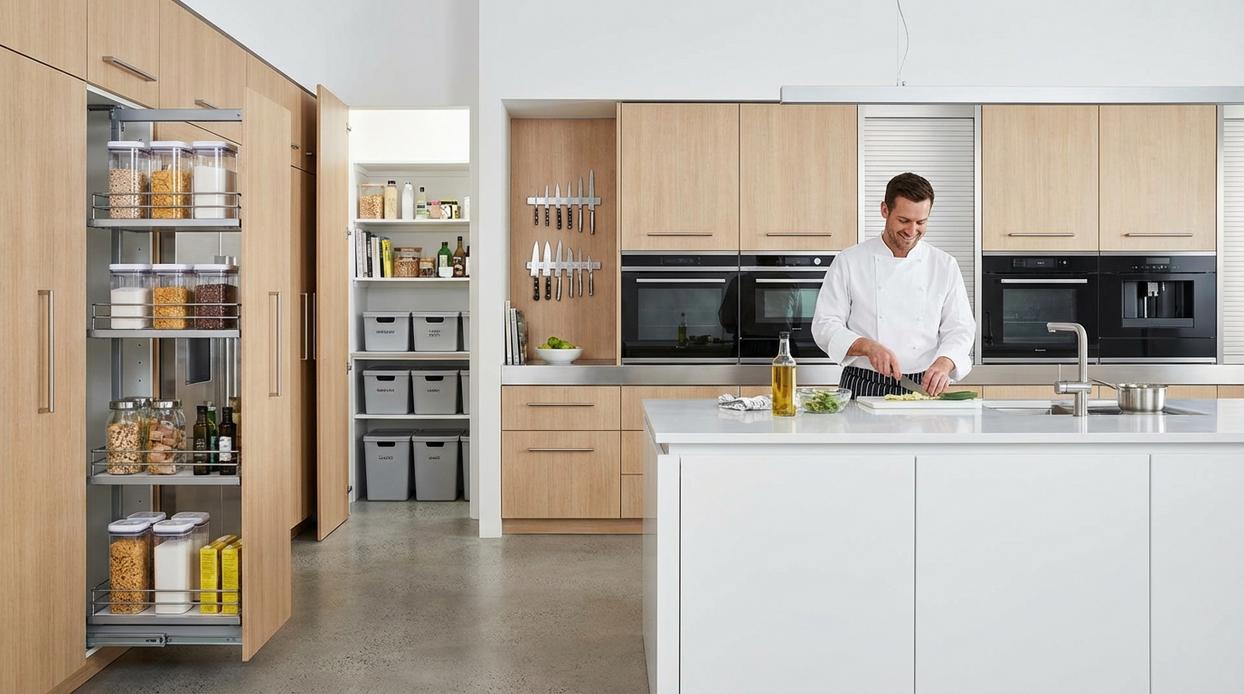
Kitchen zoning is the practice of grouping items by function rather than by type. Instead of storing all utensils together, you place tools where they’re actually used. The goal is simple: reduce steps, reduce friction, and create organized kitchen efficiency. I won’t pretend there’s one “perfect” layout—every kitchen footprint is different—but the principle holds up in most real homes.
Some people argue that traditional storage (all plates in one cabinet, all tools in one drawer) is simpler. And in fairness, that can work—especially in smaller kitchens. But when you cook often, movement adds up (those extra steps feel longer when you’re juggling boiling pasta).
Zone 1: The Prep Zone
Near clear counter space, keep:
- Mixing bowls
- Cutting boards
- Knives
- Measuring cups and spoons
If you’ve ever crossed the kitchen three times just to chop an onion, you know why this matters.
Zone 2: The Cooking Zone
Around the stove and oven, store pots, pans, spatulas, cooking spoons, and frequently used spices. Some chefs debate whether spices belong here due to heat exposure. That’s fair—excess heat can reduce potency (National Center for Home Food Preservation). If heat is intense, consider a nearby drawer instead.
Zone 3: The Consumables Zone
Your pantry and refrigerator should group foods logically—baking supplies together, grains together, canned goods together. It’s not glamorous, but it prevents buying duplicates.
Zone 4: The Cleaning Zone
Under the sink: soaps, sponges, trash bags, and cleaning sprays.
Zone 5: The Daily Use Zone
Near the coffee maker or toaster, store mugs, dishes, and flatware. Morning-you will be grateful.
Maximize Every Inch: Smart Storage Solutions That Actually Work
If your kitchen feels cramped, you don’t necessarily need more space. You need smarter systems. The goal is organized kitchen efficiency—a setup where every inch serves a purpose (yes, even that awkward corner cabinet you avoid).
Go Vertical
Most cabinets waste vertical space. Fix that with:
- Shelf risers to double stacking room for plates or mugs
- Stackable, uniform containers
- Under-shelf baskets for wraps or snack packs
Some argue stacking makes access harder. True—if you stack randomly. Instead, group by category and frequency. Everyday items go on top. Holiday platters? Up high.
Drawer Dividers Are Non-Negotiable
Drawers become junk magnets without structure. Adjustable dividers create defined zones for:
- Utensils
- Measuring tools
- Spice packets
Think of it like assigning seats at a dinner party—everything behaves better with boundaries. Measure your drawer first, then choose expandable inserts for a snug fit. (Pro tip: Clear acrylic dividers make crumbs easier to spot and clean.)
Decanting for Clarity and Space
Transferring flour, pasta, or cereal into clear, airtight containers does two things: saves space and prevents spoilage. Uniform shapes stack efficiently, and visibility allows instant inventory checks—no more buying a fourth box of spaghetti.
Skeptics say decanting takes time. It does—once. But refilling takes seconds, and airtight storage reduces food waste (USDA estimates 30–40% of food is wasted annually).
Use the “Dead Space”
Install Lazy Susans in corners, hanging racks on pantry doors, and magnetic spice racks on the fridge side. These small fixes unlock overlooked square footage.
If you’ve explored storage beyond the kitchen, you might also appreciate insights from closet organization systems explained for applying similar principles elsewhere.
Beyond Storage
Mise en place—French for “everything in its place”—turns frantic cooking into a calm rhythm. Picture chopped herbs lined like a green confetti, spices blooming warm in the air, oil shimmering in the pan. Chefs swear by it, yet some argue it’s fussy and time-consuming. Fair—but that five-minute prep prevents the sizzle-and-scramble chaos later.
• Follow the One-Touch Rule: rinse the knife, return it, wipe the counter. Clutter never gets a foothold.
Ask a smart speaker for hands-free timers or conversions, keeping organized kitchen efficiency humming like a quiet, well-tuned stove while aromas curl through the room softly.
“Remember the chaos?” she asked. “I could never find the spatula.”
Now, by decluttering, zoning, and adding smart storage, you’ve built a system designed for efficiency, not just tidiness. That old frustration—crowded counters, mystery containers, wasted time—fades because everything has a home.
As one reader told me, “When my coffee station had its own zone, mornings stopped feeling like a scavenger hunt.”
That’s the why. The system mirrors your real workflow, so organized kitchen efficiency feels natural, not forced.
So start small. Pick one zone—just one—today, and reset it. Momentum begins there. You’ll notice the difference immediately. And breathe easier.
To elevate your kitchen organization game, don’t forget to check out the ‘Mintpaldecor Home Hacks From Myinteriorpalace‘ article for creative tips that can transform your space into a functional haven.
Bring Calm and Control Back to Your Kitchen
You came here looking for practical ways to create a kitchen that feels calmer, cleaner, and easier to manage—and now you have the tools to make it happen. From smarter storage solutions to daily reset routines and simple smart-home upgrades, you’ve seen how small, intentional changes can transform chaos into clarity.
The real pain point isn’t just clutter. It’s the stress, wasted time, and mental overload that come from constantly searching for items, cleaning the same mess twice, or feeling behind before the day even starts. An intentionally designed space built around organized kitchen efficiency doesn’t just look better—it works better for you.
Now it’s your move. Choose one cabinet, one drawer, or one counter and apply what you’ve learned today. Create systems that support your routines instead of fighting them. If you’re ready to fully eliminate kitchen overwhelm and finally enjoy a streamlined, stress-free space, explore our top-rated home organization resources and start your transformation today. Your kitchen should support your life—not complicate it.
 Valyssa Esthova writes the kind of wellness and home living routines content that people actually send to each other. Not because it's flashy or controversial, but because it's the sort of thing where you read it and immediately think of three people who need to see it. Valyssa has a talent for identifying the questions that a lot of people have but haven't quite figured out how to articulate yet — and then answering them properly.
They covers a lot of ground: Wellness and Home Living Routines, Home Organization Hacks, Current Highlights, and plenty of adjacent territory that doesn't always get treated with the same seriousness. The consistency across all of it is a certain kind of respect for the reader. Valyssa doesn't assume people are stupid, and they doesn't assume they know everything either. They writes for someone who is genuinely trying to figure something out — because that's usually who's actually reading. That assumption shapes everything from how they structures an explanation to how much background they includes before getting to the point.
Beyond the practical stuff, there's something in Valyssa's writing that reflects a real investment in the subject — not performed enthusiasm, but the kind of sustained interest that produces insight over time. They has been paying attention to wellness and home living routines long enough that they notices things a more casual observer would miss. That depth shows up in the work in ways that are hard to fake.
Valyssa Esthova writes the kind of wellness and home living routines content that people actually send to each other. Not because it's flashy or controversial, but because it's the sort of thing where you read it and immediately think of three people who need to see it. Valyssa has a talent for identifying the questions that a lot of people have but haven't quite figured out how to articulate yet — and then answering them properly.
They covers a lot of ground: Wellness and Home Living Routines, Home Organization Hacks, Current Highlights, and plenty of adjacent territory that doesn't always get treated with the same seriousness. The consistency across all of it is a certain kind of respect for the reader. Valyssa doesn't assume people are stupid, and they doesn't assume they know everything either. They writes for someone who is genuinely trying to figure something out — because that's usually who's actually reading. That assumption shapes everything from how they structures an explanation to how much background they includes before getting to the point.
Beyond the practical stuff, there's something in Valyssa's writing that reflects a real investment in the subject — not performed enthusiasm, but the kind of sustained interest that produces insight over time. They has been paying attention to wellness and home living routines long enough that they notices things a more casual observer would miss. That depth shows up in the work in ways that are hard to fake.