
If you’re searching for practical ways to make your home feel bigger, calmer, and more functional, you’re in the right place. This article is designed to help you rethink your layout, streamline your routines, and implement small space storage solutions that actually work in real life—not just on social media.
Many homes struggle with cluttered countertops, overstuffed closets, and rooms that feel cramped despite having plenty of potential. The challenge isn’t always square footage—it’s strategy. Here, you’ll find smart organization hacks, space-saving furniture ideas, and clever storage integrations that maximize every inch without sacrificing style or comfort.
Our approach is rooted in hands-on testing, practical home organization principles, and insights drawn from modern wellness-focused living. We focus on solutions that are affordable, easy to implement, and adaptable to different home layouts.
By the end, you’ll have clear, actionable ideas to transform tight spaces into organized, breathable environments that support your daily routines.
Reclaim Your Space: Smart Organization for Small Homes
Living in a small home can feel like a daily tug-of-war with clutter. Back in 2020, when many of us began spending more time indoors, that frustration only intensified. However, this isn’t about tossing everything you own. Instead, it’s about building smart systems for the things you love. In the next few minutes, you’ll discover practical, clever small space storage solutions that leverage vertical space, embrace multi-functional furniture, and reveal hidden nooks. Over time, these strategies transform cramped rooms into calm, functional retreats. Think less chaos, more control (yes, it is possible).
Think Up, Not Out: Mastering Vertical Storage
I once lived in a studio where opening the closet door meant bumping into the bed (yes, it was that tight). That’s when I learned the golden rule of small rooms: use your walls. When you draw the eye upward, a space instantly feels taller and more breathable. Designers call this “vertical visual flow” — guiding attention from floor to ceiling to create perceived height.
Start with bold moves:
- Floor-to-ceiling bookshelves to anchor a living room
- Floating shelves for decor or everyday kitchenware
- Wall-mounted desks that free up precious floor space
In the kitchen, vertical thinking is a game changer. Magnetic knife strips free drawer space. Pegboards hold pots and utensils like a chic culinary command center (very Julia Child meets Pinterest). Tiered shelving inside cabinets doubles usable space instantly.
Closets benefit just as much. Add hanging organizers, install extra shelves above the clothing rod, and use over-the-door shoe racks. Suddenly, that cramped nook feels intentional.
Some argue tall storage makes rooms feel crowded. I disagree. When styled thoughtfully, vertical systems create structure — not clutter.
Pro tip: leave a little negative space on each shelf so the room can “breathe.”
Walls are your most underused asset — especially when exploring small space storage solutions.
Your Furniture’s Secret Life: The Power of Multi-Functionality
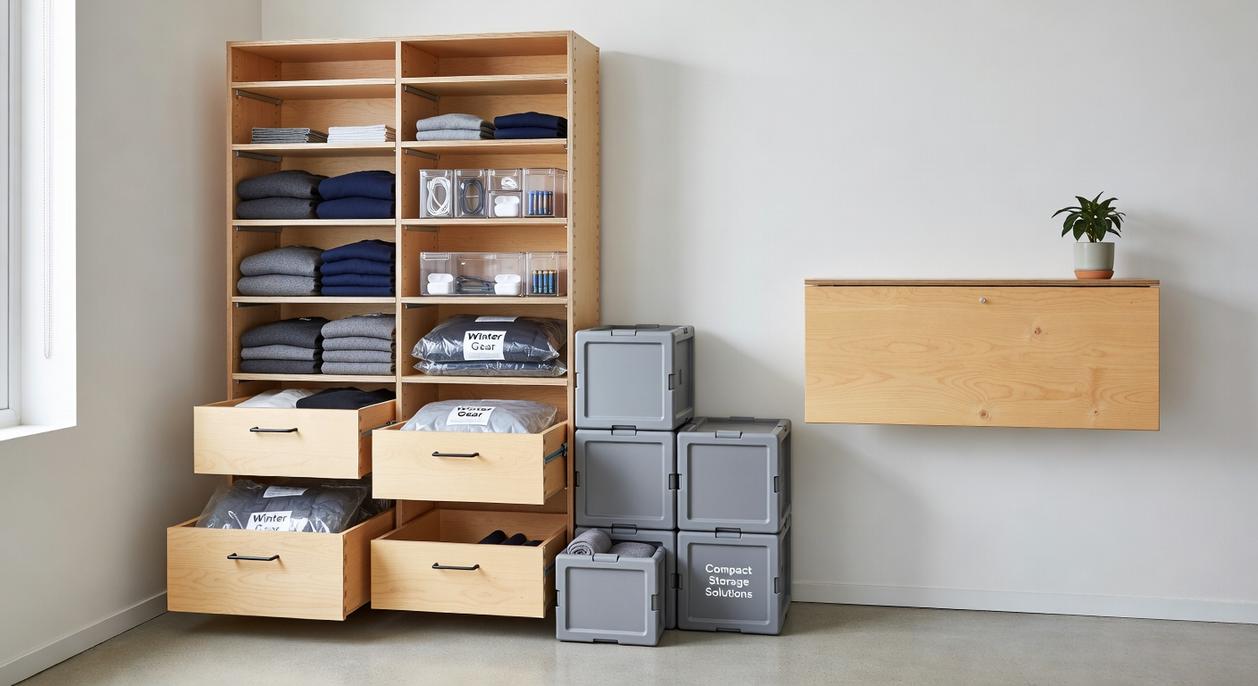
We’ve been told that a well-designed room needs more pieces: a coffee table, a desk, a dresser, extra seating. But more furniture often means more clutter. Instead, consider multi-functional furniture—pieces intentionally designed to serve at least two purposes. In short, one item works overtime so your space doesn’t have to.
Take the living room. A storage ottoman (an upholstered seat with hidden interior space) swallows blankets, remotes, and board games in seconds. A lift-top coffee table transforms into a desk—ideal for remote work or late-night takeout (because yes, the couch doubles as your office sometimes). And a convertible sofa bed replaces the need for a separate guest room. Some argue sofa beds are uncomfortable. That used to be true. Modern designs now rival standard mattresses, according to Consumer Reports’ furniture testing insights.
In the bedroom, captain’s beds—with built-in drawers underneath—can eliminate the bulky dresser entirely. Pair that with a headboard featuring integrated shelving, and suddenly books, chargers, and glasses have a home. Clutter thrives on homelessness; give every item an address.
Meanwhile, dining areas benefit from expandable or drop-leaf tables that flex with your guest list. Benches with hidden compartments outperform traditional chairs by storing linens or rarely used appliances. It’s not just trendy minimalism—it’s strategy.
If you’re exploring small space storage solutions, multi-functional pieces are foundational. Pro tip: measure twice before buying expandable furniture to ensure clearance.
And when optimizing tight kitchens, review how to organize your kitchen for maximum efficiency.
Ultimately, fewer pieces—chosen wisely—create more breathing room (and far less visual chaos).
Finding Space You Didn’t Know You Had
Take a slow walk through your home. Now ask yourself: where are you not looking? Most of us overlook storage hiding in plain sight (yes, even that awkward gap you pretend isn’t there).
First, consider the under-bed zone. Instead of letting dust bunnies claim it, slide in rolling containers for off-season clothes or extra bedding. Vacuum-sealed bags are especially useful because they compress bulky fabrics by up to 75%, according to Good Housekeeping’s product tests. Pro tip: label everything clearly so you’re not digging through plastic in December looking for one sweater.
Next, open your cabinets—and look at the doors. Install slim organizers inside for:
- Cleaning sprays and sponges
- Spice jars
- Hair tools or toiletries
Suddenly, wasted inches become functional storage.
Meanwhile, glance upward. The space above kitchen cabinets or door frames is perfect for decorative baskets holding rarely used appliances or seasonal décor. (If it’s only needed once a year, it doesn’t need eye-level real estate.)
Finally, explore “in-between” spaces. A slim rolling cart between the refrigerator and wall can act as a pull-out pantry for canned goods and oils. These small space storage solutions turn forgotten gaps into practical assets—no renovation required.
Decluttering isn’t about prettier bins; it’s about better habits. Research from UCLA’s Center on Everyday Lives of Families found that visible clutter increases cortisol levels, especially for women—meaning mess literally raises stress. That’s why systems matter.
Start with the “One In, One Out” rule: whenever a new item enters your home, one leaves. It sounds simple (almost annoyingly so), but it creates a hard stop against accumulation. Pair it with the “Container Concept.” A container—bin, basket, divider—sets a physical boundary. When it’s full, that category is full. No exceptions. Even small space storage solutions work best when they define limits, not hide overflow.
Create a Donation Station: a permanent box in a closet for items you’re ready to release. This makes decluttering continuous, not dramatic.
• PROTECT YOUR PEACE
• Use uniform bins for visual calm
• Review containers monthly to reset limits
Studies in Personality and Social Psychology Bulletin link tidy spaces with improved focus and self-control—proof that order supports WELLNESS.
Creating a System That Lasts
Use vertical space with wall shelves, over-the-door racks, and stackable bins to free up floors. Choose double-duty furniture like ottomans with storage or beds with drawers. Scout hidden nooks—under stairs, behind doors, above cabinets—and label what lives there. Practice mindful habits: reset each room nightly, follow a one-in, one-out rule, and keep only what you use.
The goal isn’t a PERFECT makeover; it’s a system you’ll maintain. Even small homes thrive with small space storage solutions and consistent routines. Pick drawer, shelf, or corner today, declutter it, assign homes for items, and enjoy momentum. Start.
By incorporating these creative storage solutions for small spaces, you can not only maximize your area but also make it easier to maintain a sense of order—perfect for enhancing your Weekly Reset Routine to Keep Your Home Tidy.
Make Your Space Work Smarter Starting Today
You came here looking for practical ways to make your home feel calmer, more functional, and less overwhelming. Now you have the strategies to declutter with intention, build supportive wellness routines, and integrate smart systems that actually simplify your day.
The real frustration isn’t just limited square footage — it’s feeling like your space is working against you. When storage is chaotic and routines are inconsistent, stress builds fast. That’s why implementing small space storage solutions and smart organization habits isn’t just about aesthetics — it’s about reclaiming control and peace of mind.
Now it’s time to take action. Choose one room, apply one strategy, and create immediate momentum. If you’re ready for a home that feels organized, efficient, and aligned with your lifestyle, explore our proven guides and tools trusted by thousands of readers looking to transform their living spaces. Start today and turn your home into a space that truly supports you.
 Valyssa Esthova writes the kind of wellness and home living routines content that people actually send to each other. Not because it's flashy or controversial, but because it's the sort of thing where you read it and immediately think of three people who need to see it. Valyssa has a talent for identifying the questions that a lot of people have but haven't quite figured out how to articulate yet — and then answering them properly.
They covers a lot of ground: Wellness and Home Living Routines, Home Organization Hacks, Current Highlights, and plenty of adjacent territory that doesn't always get treated with the same seriousness. The consistency across all of it is a certain kind of respect for the reader. Valyssa doesn't assume people are stupid, and they doesn't assume they know everything either. They writes for someone who is genuinely trying to figure something out — because that's usually who's actually reading. That assumption shapes everything from how they structures an explanation to how much background they includes before getting to the point.
Beyond the practical stuff, there's something in Valyssa's writing that reflects a real investment in the subject — not performed enthusiasm, but the kind of sustained interest that produces insight over time. They has been paying attention to wellness and home living routines long enough that they notices things a more casual observer would miss. That depth shows up in the work in ways that are hard to fake.
Valyssa Esthova writes the kind of wellness and home living routines content that people actually send to each other. Not because it's flashy or controversial, but because it's the sort of thing where you read it and immediately think of three people who need to see it. Valyssa has a talent for identifying the questions that a lot of people have but haven't quite figured out how to articulate yet — and then answering them properly.
They covers a lot of ground: Wellness and Home Living Routines, Home Organization Hacks, Current Highlights, and plenty of adjacent territory that doesn't always get treated with the same seriousness. The consistency across all of it is a certain kind of respect for the reader. Valyssa doesn't assume people are stupid, and they doesn't assume they know everything either. They writes for someone who is genuinely trying to figure something out — because that's usually who's actually reading. That assumption shapes everything from how they structures an explanation to how much background they includes before getting to the point.
Beyond the practical stuff, there's something in Valyssa's writing that reflects a real investment in the subject — not performed enthusiasm, but the kind of sustained interest that produces insight over time. They has been paying attention to wellness and home living routines long enough that they notices things a more casual observer would miss. That depth shows up in the work in ways that are hard to fake.