

Creating a secure, comfortable living space starts with understanding the importance of home safety basics. Too often, homeowners respond to accidents after they happen—whether it’s a small kitchen fire, a preventable fall, or a security oversight that could have been avoided. This guide takes a proactive approach, offering a clear framework to help you identify risks before they become emergencies. Drawing on extensive experience in home wellness and organization, we focus on practical, easy-to-implement strategies. You’ll discover actionable tips covering fire prevention, physical security, and everyday hazard reduction—so you can confidently build a safer, more resilient home environment.
Fire and Air Quality: Your First Line of Defense
Understanding home safety basics starts with detection. Smoke alarms sense airborne particles from fire, while carbon monoxide (CO) detectors monitor an invisible, odorless gas produced by fuel-burning appliances. Interconnected alarms mean when one sounds, they all sound—critical for larger homes. Install them on every level, inside bedrooms, and outside sleeping areas. Test monthly and change batteries yearly (yes, even if they’re still chirping politely).
Fire Extinguisher Essentials
For most homes, choose an ABC extinguisher. “A” covers ordinary materials like wood, “B” handles flammable liquids, and “C” is for electrical fires. Keep units in high-risk zones such as the kitchen and garage. Remember the P.A.S.S. method:
- Pull the pin
- Aim at the base of the fire
- Squeeze the handle
- Sweep side to side
Kitchen fires are the leading cause of home fires. Never leave cooking unattended, manage grease carefully, and keep a clear “no-burn zone” around the stovetop—no oven mitts, paper towels, or loose packaging nearby (a cluttered counter is not your friend).
Finally, develop and practice an escape plan. Every room needs two exits and one outdoor meeting spot. Practice regularly—like a fire drill, minus the high school nostalgia.
Securing Your Perimeter: Doors, Windows, and Deterrents
First and foremost, your doors deserve serious attention. A solid-core door (meaning it’s made of dense wood or composite, not hollow inside) paired with a Grade 1 or 2 deadbolt—rated by ANSI for strength—with at least a one-inch throw creates a formidable barrier. Just as important, reinforce the strike plate with three-inch screws so the frame, not just the trim, absorbs force. Many break-ins happen because the frame splinters, not the lock fails.
Next, consider your windows. High-quality window locks are essential, but adding security film—a transparent layer that holds shattered glass together—can prevent easy entry. For ground-floor windows, plant thorny shrubs beneath them. It’s a simple, low-tech deterrent (and surprisingly effective).
Equally powerful is light. Motion-activated floodlights remove hiding spots instantly. Meanwhile, smart bulbs or timers can mimic natural activity patterns. A house that looks occupied is far less appealing to intruders.
Finally, maintain a lived-in appearance when you’re away. Pause mail delivery, schedule lawn care, and use smart routines to alternate lights or even play ambient audio. These home safety basics work because they reduce opportunity—without turning your home into a fortress.
Mitigating Everyday Risks: Preventing Slips, Trips, and Falls
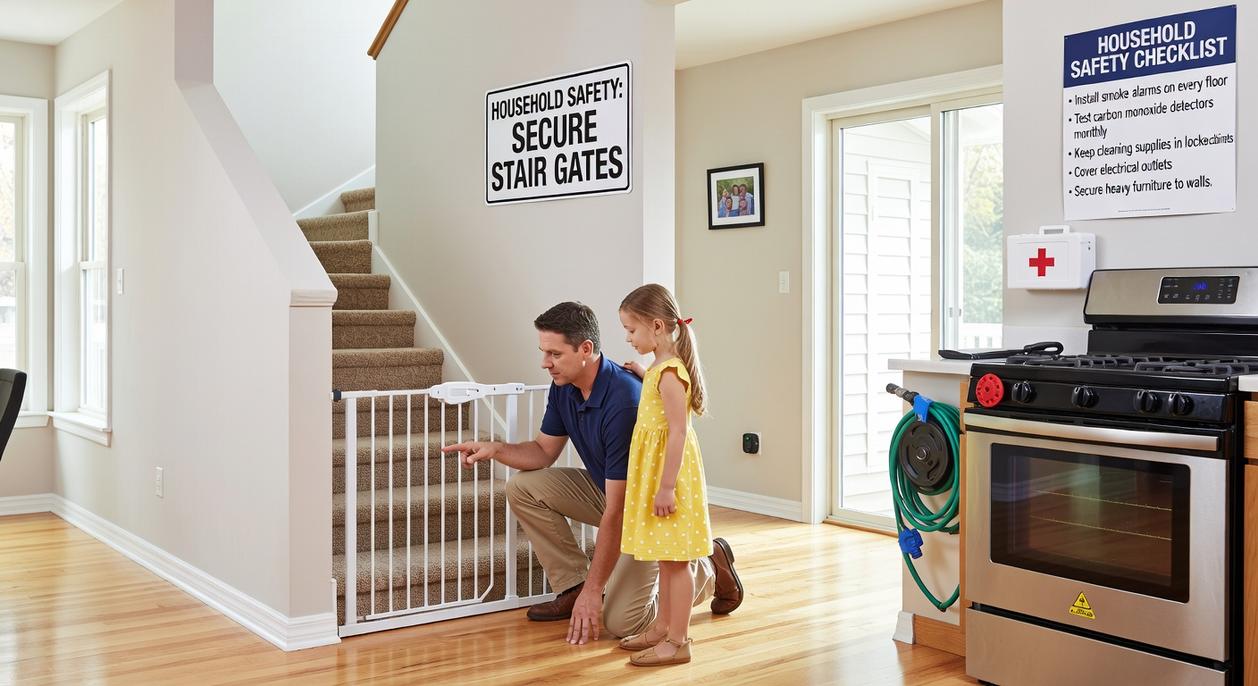
Let’s start from the ground up—literally. Floor and rug safety matters more than we admit. That charming area rug? It can turn into a slip-and-slide without a high-quality, non-slip pad underneath. On hard-surface floors especially, unsecured rugs are repeat offenders (and no, they won’t apologize after tripping you).
Next, consider stairway integrity. Sturdy handrails, bright lighting at both the top and bottom, and a strict no-clutter rule are non-negotiable. Shoes, laundry piles, random Amazon boxes—stairs are not storage units.
Meanwhile, bathrooms are basically water parks without lifeguards. Prevent falls with non-slip mats inside and outside the tub or shower, and install grab bars where needed. Wet tile plus socks is a risky combo.
Finally, effective cord management saves toes daily. Secure cords along baseboards or tuck them behind furniture. It’s one of those home safety basics that pairs perfectly with smart planning, like the principles in foundations of functional interior design.
The Digital Fortress: Smart Home and Network Security
A secure home starts with smart security foundations. Video doorbells and smart locks let you monitor and control access remotely, creating a real-time record of who approaches your door. According to Statista, over 60% of U.S. internet households now use at least one smart home device, showing how mainstream these tools have become. Yet convenience without protection is like locking your front door but leaving the windows open.
Your Wi-Fi network is the true gateway. The FBI has repeatedly warned that default router credentials are a top vulnerability. Protect your system with:
- A unique router password
- WPA3 encryption
- A separate guest network
These steps reinforce home safety basics while securing connected devices.
Safety also means wellness. Smart sensors detect leaks, poor air quality, or unusual temperature shifts—issues that cause billions in property damage annually (Insurance Information Institute). Think of it as your home’s immune system, quietly guarding your space.
From House to Haven: Integrating Safety into Your Daily Life
A safe home doesn’t happen by accident. It’s built—one practical step at a time.
Start with a centralized emergency kit. Think of it as your household’s “just in case” box. Include water (one gallon per person per day, per FEMA), non-perishable food, a first-aid kit, flashlights, extra batteries, and a hand-crank radio. These are home safety basics that matter when power grids fail or storms roll in (and they always seem to hit at 2 a.m.). Store everything in a waterproof container you can grab fast.
Next, organize critical information. Create a grab-and-go binder or encrypted digital folder with copies of IDs, insurance policies, birth certificates, and a written list of emergency contacts. If your phone dies, you’ll still have what you need.
The real shift, though, is mindset. Safety isn’t a weekend project—it’s a rhythm. Check locks before bed. Test smoke alarms on the first of the month. Replace batteries twice a year.
Prediction (SPECULATION): As smart homes evolve, automated safety checks will become STANDARD, not luxury. But tech can fail. Habits rarely do.
- Pro tip: Set calendar reminders for monthly five-minute safety reviews.
Now choose ONE step and complete it this week. Knowledge is nice. Action is SAFER.
Make Your Home Safer and Smarter Starting Today
You came here looking for practical ways to strengthen your living space with smarter systems, healthier routines, and home safety basics that truly protect what matters most. Now you have a clear roadmap to reduce risks, simplify daily life, and create a home that works for you—not against you.
The truth is, feeling unsure about your home’s safety or struggling with clutter, outdated systems, or inconsistent routines can quietly drain your peace of mind. Small gaps in safety and organization often turn into bigger, more expensive problems over time.
Take action today. Walk through your home and implement one improvement from each area—safety, wellness, smart tech, and organization. Then build from there.
If you’re ready for step-by-step guidance that removes the guesswork, explore our top-rated resources and practical checklists designed to help you secure, streamline, and upgrade your home with confidence. Start now and turn your home into the safe, efficient sanctuary you deserve.
 Valyssa Esthova writes the kind of wellness and home living routines content that people actually send to each other. Not because it's flashy or controversial, but because it's the sort of thing where you read it and immediately think of three people who need to see it. Valyssa has a talent for identifying the questions that a lot of people have but haven't quite figured out how to articulate yet — and then answering them properly.
They covers a lot of ground: Wellness and Home Living Routines, Home Organization Hacks, Current Highlights, and plenty of adjacent territory that doesn't always get treated with the same seriousness. The consistency across all of it is a certain kind of respect for the reader. Valyssa doesn't assume people are stupid, and they doesn't assume they know everything either. They writes for someone who is genuinely trying to figure something out — because that's usually who's actually reading. That assumption shapes everything from how they structures an explanation to how much background they includes before getting to the point.
Beyond the practical stuff, there's something in Valyssa's writing that reflects a real investment in the subject — not performed enthusiasm, but the kind of sustained interest that produces insight over time. They has been paying attention to wellness and home living routines long enough that they notices things a more casual observer would miss. That depth shows up in the work in ways that are hard to fake.
Valyssa Esthova writes the kind of wellness and home living routines content that people actually send to each other. Not because it's flashy or controversial, but because it's the sort of thing where you read it and immediately think of three people who need to see it. Valyssa has a talent for identifying the questions that a lot of people have but haven't quite figured out how to articulate yet — and then answering them properly.
They covers a lot of ground: Wellness and Home Living Routines, Home Organization Hacks, Current Highlights, and plenty of adjacent territory that doesn't always get treated with the same seriousness. The consistency across all of it is a certain kind of respect for the reader. Valyssa doesn't assume people are stupid, and they doesn't assume they know everything either. They writes for someone who is genuinely trying to figure something out — because that's usually who's actually reading. That assumption shapes everything from how they structures an explanation to how much background they includes before getting to the point.
Beyond the practical stuff, there's something in Valyssa's writing that reflects a real investment in the subject — not performed enthusiasm, but the kind of sustained interest that produces insight over time. They has been paying attention to wellness and home living routines long enough that they notices things a more casual observer would miss. That depth shows up in the work in ways that are hard to fake.